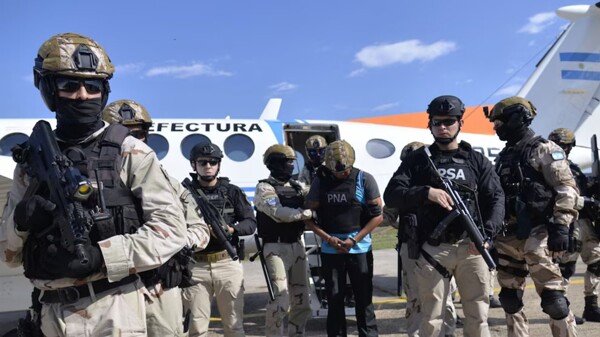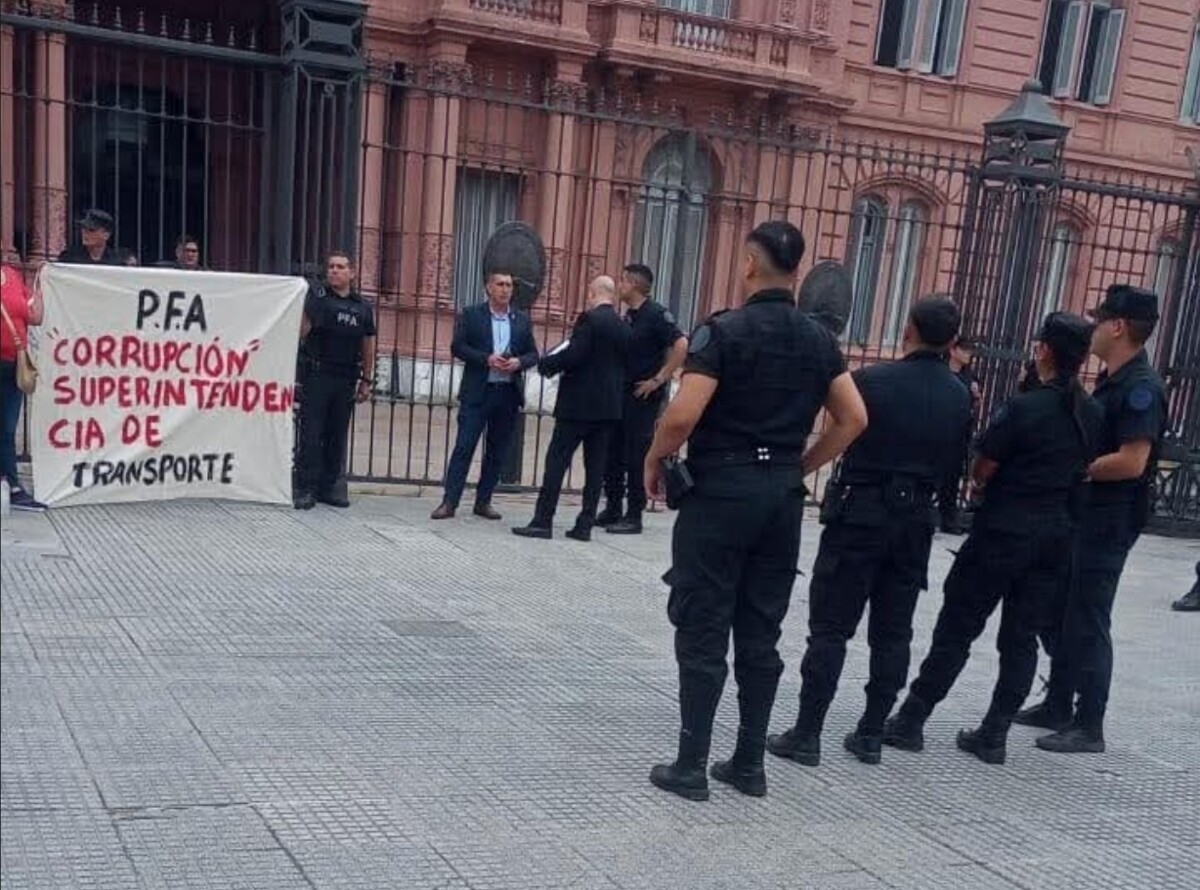
Buenos Aires, February 4, 2026 – Total News Agency-TNA-A high-impact institutional event shook the country's political center this Tuesday when a non-commissioned officer of the Argentine Federal Police, serving in the Superintendence of Security in Transport, handcuffed himself to the fence of the Casa Rosada in an extreme form of protest.
According to information reconstructed by Total News Agency, the episode is the direct consequence of years of ignored internal complaints, documented in an extensive letter sent to the then Minister of Security, Patricia Bullrich, and the force's leadership, without any corrective measures being adopted.
The extreme act of the non-commissioned officer handcuffed in front of the executive branch building sought, according to his colleagues, "to break the silence" and draw the attention of national authorities.
The protest was not an isolated or improvised act. In parallel, groups of active and retired officers concentrated at different points in the City of Buenos Aires to make visible demands that, they claim, have been dragging on since the Bullrich administration and have worsened in the last year.
Protesters denounced that incomes do not keep up with the cost of living, that basic supplies for daily service are insufficient, and that the police social security plan presents delays, benefit cuts, and difficulties in accessing complex medical treatments.
In this context, the gesture of the handcuffed officer in front of the Casa Rosada appears as the breaking point of a chain of unheard complaints, aggravated by low salaries, expired equipment, and a feeling of institutional abandonment.
The situation of the police social security plan appears as another critical axis. Delays in reimbursements, difficulties in accessing medical shifts, and a reduction in agreements with clinics and specialists are denounced.
One of the most questioned points is the salary gap between the top and the base of the pyramid. The official salary list shows that a general commissioner earns $2,955,560.26, while a non-commissioned officer, one of the ranks with the most operational exposure, earns just under a million pesos. These figures, according to the protesters, are insufficient against the sustained increase in rents, transportation, and food.
To the salary issue is added the lack of equipment. Officers consulted described non-serviceable vehicles, expired or poor-condition bulletproof vests, and a shortage of ammunition for training.
"We are required to have professionalism and a presence on the street, but many times we work with minimal resources," stated a retired non-commissioned officer who accompanied the protest.
The text also describes a degraded internal climate, with parties inside police facilities, alcohol consumption, post abandonment, and situations of extreme gravity such as the neglect of detention cells and even the alleged removal of prisoners from their cells to participate in informal gatherings, all with the knowledge of superiors.
The climate of fear within is a central axis of the document. "No one reports these things for fear of reprisals, mistreatment, and any type of consequence that may arise from making a comment about this and everything already mentioned," the letter states.
Despite the severity of the accusations, as of this report's closing, there have been no official statements from the Ministry of Security or the Argentine Federal Police, nor announcements about internal investigations or judicial proceedings derived from the facts denounced.